

Quick answer
The NYC whale watching season runs from mid-April through early November, with peak sightings concentrated between June and September when humpback whales, fin whales, and occasionally minke whales follow baitfish into New York Harbor. Spring arrivals begin as waters warm and Atlantic menhaden schools migrate north; autumn extends the window as whales feed heavily before their southbound journey. Outside these months, sightings drop to near zero as species winter in Caribbean or mid-Atlantic waters.
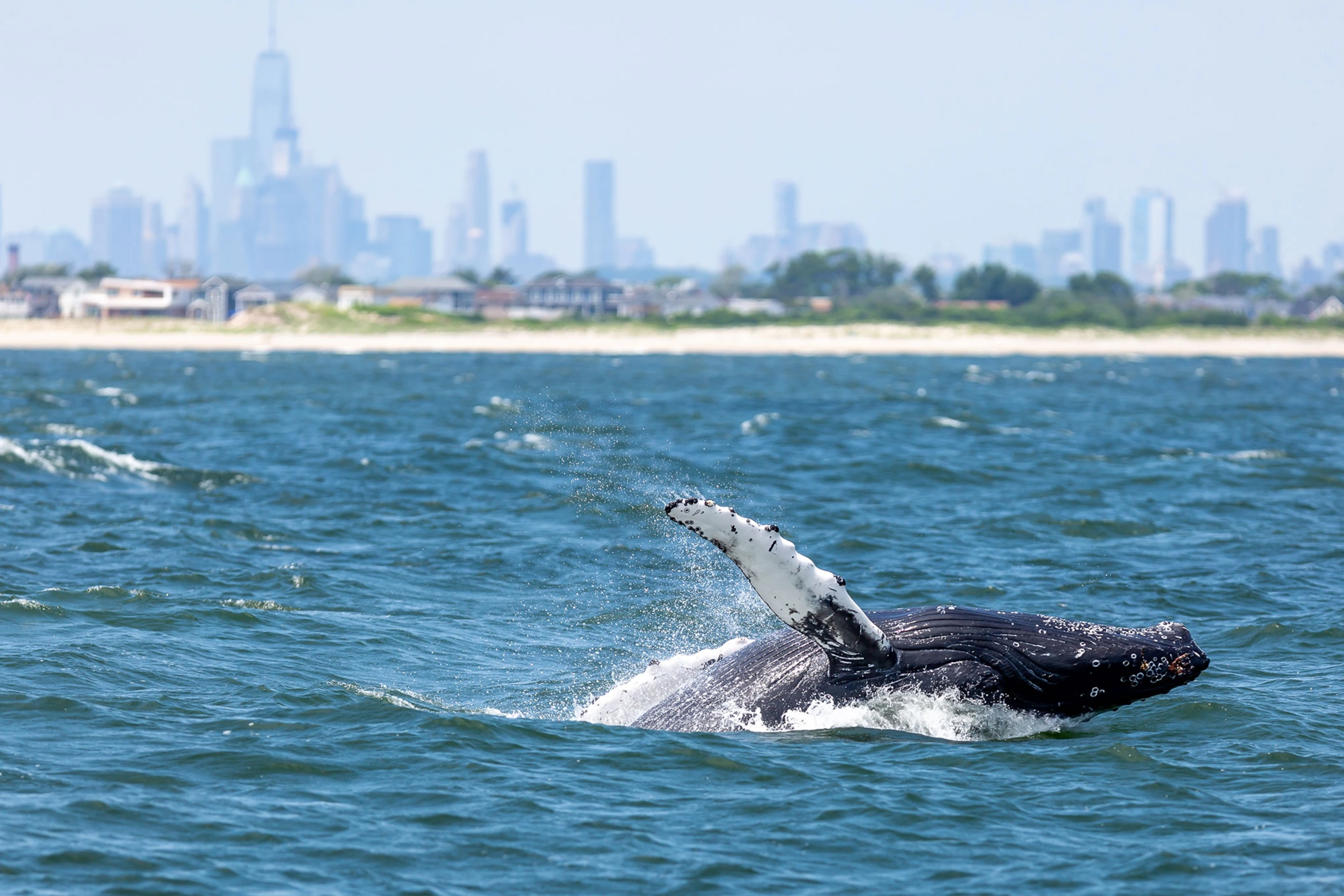
Humpback whales were functionally absent from New York waters for decades, victims of commercial whaling and habitat degradation, yet the population rebounded so sharply that by 2011 researchers documented consistent seasonal returns to the harbor. Today the nyc whale watching season mirrors the broader North Atlantic feeding calendar: baleen whales track prey north as spring warms coastal shelves, linger through summer in productive feeding zones, then depart before winter storms arrive. New York Harbor benefits from its position at the confluence of the Hudson River outflow and open Atlantic currents, creating nutrient upwellings that concentrate menhaden, sand lance, and other baitfish schools. Migration timing follows a rough progression. Fin whales and minke whales appear first, sometimes as early as mid-April, though sightings remain sporadic until May when water temperatures stabilize above 50°F. Humpback whales arrive in force by late May or early June, often visible from shore-based observation points along the Rockaway Peninsula and Sandy Hook. Peak abundance occurs July through September when multiple species overlap: humpbacks dominate numerically, but fin whales—longer and faster—patrol deeper channels, and the occasional minke whale surfaces in calmer bays. Gotham Whale, the nonprofit research collaborative, catalogs sightings across the season and has identified individual humpbacks returning to the same harbor feeding grounds year after year, a behavioral fidelity that underscores the region's ecological recovery. Autumn extends the whale watching window into October and early November as southbound migration begins. Sightings taper quickly after mid-November when most animals have cleared the Mid-Atlantic Bight en route to Caribbean breeding grounds. Weather becomes the limiting factor: winter gales and reduced daylight shutter most tour operations by late November even if isolated whales linger offshore. The spring shoulder season in April offers fewer guarantees but rewards patient observers with the spectacle of northbound travelers breaking their journey to feed in harbor waters still rich with overwintering baitfish. Understanding the nyc whale watching season means recognizing that these are wild, migratory animals whose presence depends on prey availability, ocean temperature, and individual behavior. No month guarantees a sighting, but the June–September core window aligns with the highest documented encounter rates and the most favorable sea conditions for small-boat observation.
“Humpback whales were functionally absent from New York waters for decades, yet the population rebounded so sharply that by 2011 researchers documented consistent seasonal returns to the harbor.”
Understanding the NYC Whale Watching Season
The primary whale watching season in New York Harbor spans from late spring through autumn, with humpback whales most active as they follow migratory patterns. Planning your trip for the morning hours remains the most effective strategy for observing marine wildlife, as calmer surface conditions significantly improve visibility.
Late Spring (May–June)
Moderate60–70°F; increasing activity
Whales begin arriving in local waters to feed. Sightings become more frequent as temperatures rise.
Summer (July–August)
High75–85°F; peak warmth
The harbor experiences high vessel traffic. Consistent feeding activity makes this a productive window for observers.
Autumn (September–October)
Moderate60–70°F; cooling trends
Marine life remains active before the seasonal migration south. Water conditions are often stable during these months.
Morning departures
Low—
The best arrival window is 09:00–12:00. Morning departures offer calmer waters and higher visibility for marine wildlife.
Verdict: The optimal period for whale watching is from July to September, specifically selecting morning departures between 09:00 and 12:00 to capitalize on favorable water conditions.
Operating Hours During the NYC Whale Watching Season
Tours departing from New York Harbor operate on a set weekly schedule during the whale watching season. Operations are concentrated toward the end of the week and throughout the weekend.
| monday | Closed | |
|---|---|---|
| tuesday | Closed | |
| wednesday | Closed | |
| thursday | Closed | |
| friday | 09:00–18:00 | |
| saturday | 09:00–18:00 | |
| sunday | 09:00–18:00 |
These hours remain consistent throughout the established whale watching season.
NYC Whale Watching Season Costs and Admission Fees
Access to the New York Harbor area is free of charge for the public. Whale watching experiences require a separate, paid booking through professional operators.
There is no admission fee to enter the harbor, but visitors must pay for individual tour bookings based on the operator selected.
Getting to New York Harbor for the NYC Whale Watching Season
Whale watching tours depart from New York Harbor, which is accessible via various public transportation networks throughout the city. Most visitors find the subway system the most efficient method for reaching the waterfront.
Take the R or W train to Whitehall St-South Ferry station
Take the M15-SBS to South St/Whitehall St
Direct service to South Street Seaport or Whitehall Terminal
NYC Whale Watching Season Visit Preparation
Prepare these essentials before your New York Harbor whale watching trip.
-
Book your tour in advance — Weekend and peak-season departures fill quickly, especially during migration months.
-
Check weather and sea conditions — Rough seas or fog can delay or cancel trips; operators notify passengers by email or phone.
-
Wear layered, wind-resistant clothing — Harbor waters are 10–15°F cooler than land, and wind chill increases on moving boats.
-
Bring motion sickness medication if needed — Even calm harbor waters involve movement; take medication 30–60 minutes before departure.
-
Pack binoculars and a camera — Whales surface unpredictably at varying distances; zoom lenses and stabilization help capture sightings.
-
Arrive 20–30 minutes early — Boarding closes promptly; late arrivals forfeit their slot with no refund.
Check availability
Frequently asked questions about nyc whale watching season
Everything you need to know about nyc whale watching season